Home » What Does the Hair Look Like One Year After a Hair Transplant?
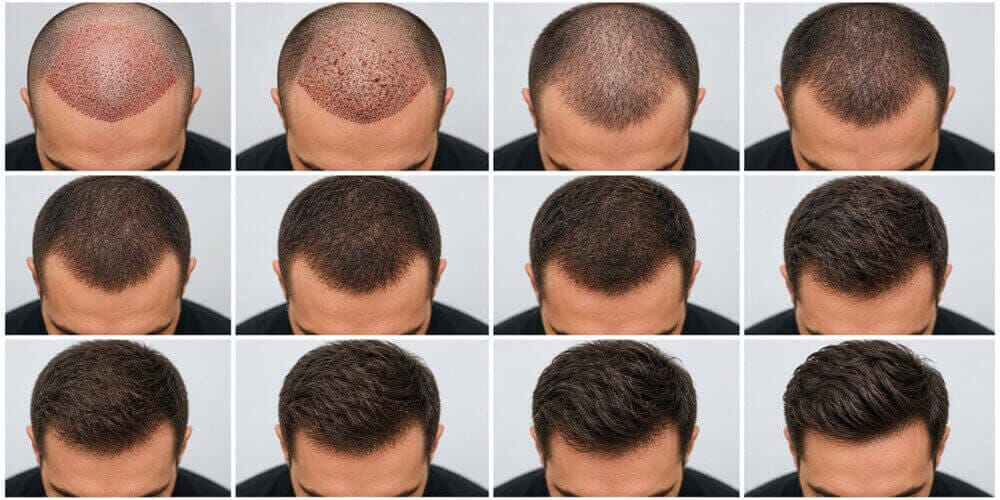
A hair transplant is a gradual process, not an instant result. Although the procedure is usually completed in a single session, the visible transformation develops month by month. This is why many patients search for terms such as hair transplant 1 year results, one year after hair transplant, hair transplant before and after 12 months, and how hair looks after hair transplant 1 year.
The one-year mark is one of the most important stages after a hair transplant. By this point, most transplanted hairs have started to grow, become thicker, and blend more naturally with the existing hair. However, every patient’s result is different. Hair type, donor area quality, number of grafts, scalp condition, aftercare, and ongoing hair loss all affect the final appearance.
In this article, we explain the full hair transplant final results timeline, what happens during each stage, what hair usually looks like after 12 months, whether the result is permanent, and how to make hair look thicker faster in a safe and realistic way.
A hair transplant works by moving healthy hair follicles from the donor area, usually the back or sides of the scalp, to thinning or bald areas. These follicles do not produce the final visible result immediately. They need time to settle, shed, restart growth, and mature.
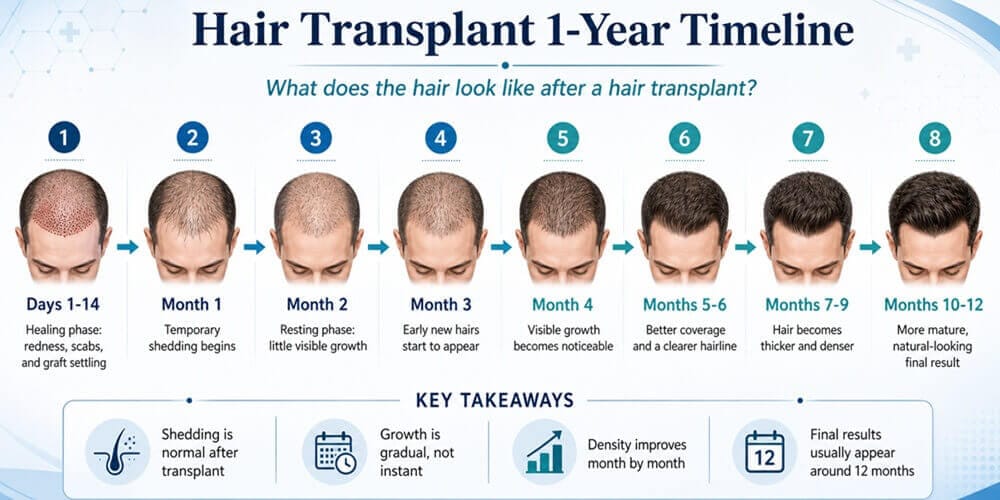
The first year after a hair transplant can be divided into several stages:
Because of these stages, the transplanted area may look different every month. Some months may feel slow, while others show clear improvement.
The first days after the procedure are focused on healing. The transplanted grafts are delicate, and the scalp needs time to recover.
What the Hair Looks Like
Immediately after the procedure, the transplanted area may look fuller because the grafts have been placed into the scalp. Small scabs may form around each graft, and the scalp may appear red or sensitive.
At this stage, the appearance is not the final result. The short hairs visible after the transplant will often shed in the following weeks.
What to Expect
During the first few days, patients may notice:
This is a normal part of the healing process.
By the end of the first two weeks, most scabs usually begin to fall away. The scalp starts to look cleaner, and the transplanted area may appear more natural.
Why This Stage Matters
The first two weeks are very important because proper aftercare helps protect the grafts. Patients should avoid scratching, rubbing, or applying pressure to the transplanted area.
What the Hair Looks Like
The hair may look short, slightly uneven, and sensitive. Some people feel happy at this stage because the transplanted area appears filled in. However, this early look is temporary because shedding usually happens soon after.
The first month can be emotionally difficult for many patients because the transplanted hairs may begin to fall out. This phase is often called shock loss or temporary shedding.
Is Shedding Normal After Hair Transplant?
Yes. Shedding is usually a normal part of the process. The visible hair shafts fall out, but the follicles remain under the skin. These follicles later begin producing new hair.
What the Hair Looks Like After One Month
At one month, the transplanted area may look thinner than it did immediately after the procedure. This can make some patients worry that the transplant has failed, but in most cases, this is expected.
Common signs include:
This stage should not be used to judge the final result.
The second month is usually one of the slowest stages. Many transplanted hairs have shed, but new growth may not yet be visible.
What the Hair Looks Like
The scalp may look similar to how it looked before the transplant. Some patients may feel disappointed because the initial fullness has disappeared.
This period is temporary. The follicles are resting beneath the skin before entering the active growth phase.
What Patients Should Focus On
During the second month, the priority should be scalp health and patience. Patients should continue following the clinic’s instructions and avoid harsh products, aggressive styling, and unnecessary pressure on the scalp.
Around the third month, some patients begin to notice the first signs of new growth. However, this growth is usually thin, soft, and uneven.
What New Hair Looks Like
Early transplanted hair may appear:
This is normal. New hair often starts as thin strands before becoming thicker and stronger over time.
Why Growth Is Uneven
Not all follicles grow at the same time. Some may start producing hair earlier, while others may remain in the resting phase longer. This is why the transplanted area can look uneven during the early growth stage.
The fourth month is often when patients begin to see more noticeable progress. The new hair may still be thin, but the transplanted area starts to show signs of improvement.
What the Hair Looks Like After Four Months
At this stage, patients may notice:
The result is still far from final. Month four is only the beginning of visible transformation.
Between months five and six, the hair usually becomes more visible. This is often the first stage where patients begin to feel more confident about the result.
What the Hair Looks Like at Six Months
At six months, many patients see:
However, the hair may still not look fully thick. Some areas may continue to appear lighter or thinner than expected.
Is Six Months the Final Result?
No. Six months is an important milestone, but it is not the final result. The transplanted hair continues to mature after this stage.
Months seven to nine are important for density improvement. During this period, the transplanted hairs often become thicker, darker, and easier to style.
What Changes During This Period?
Patients may notice:
This is when the transformation becomes more obvious in daily life and in photos.
Why Some Areas Still Look Thin
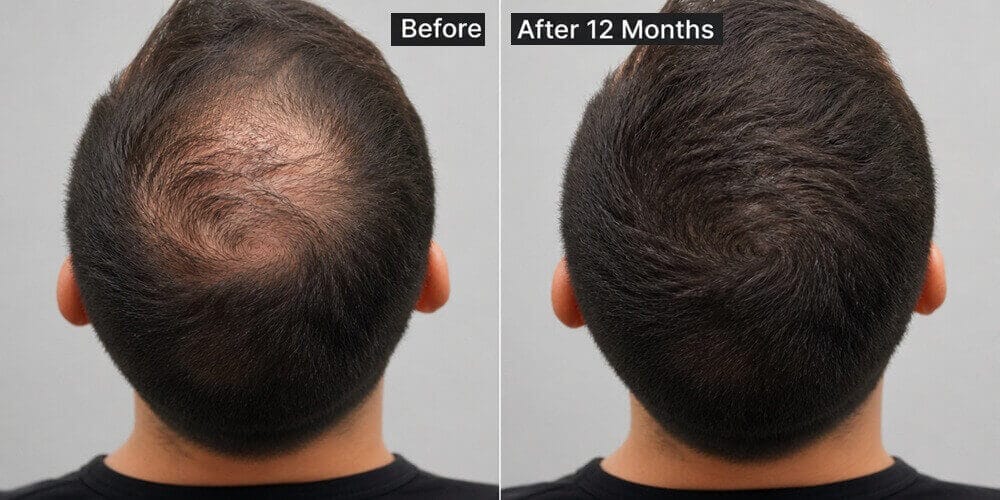
Even at nine months, some areas may still be developing. The crown area, in particular, can take longer to mature than the front hairline. This is because growth patterns and blood circulation can vary depending on the area treated.
The one-year mark is one of the most important stages in the hair transplant final results timeline. By 12 months, most patients can see a clear transformation.
What Does Hair Look Like One Year After a Hair Transplant?
One year after a hair transplant, the hair usually looks:
The hairline should look softer and more natural compared to the early months. The transplanted hair should no longer look like fine baby hair. Instead, it should have better length, strength, and structure.
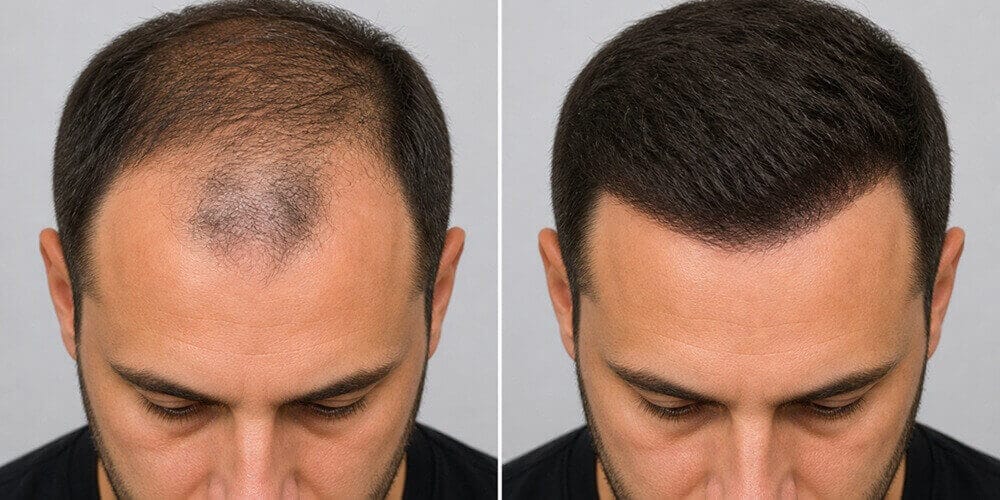
A hair transplant before and after 12 months comparison usually shows a significant difference. Areas that were previously thin or bald should appear fuller, especially if the donor area was strong and the transplant plan was realistic.
However, not every patient reaches the same density. Some may achieve excellent coverage, while others may need more time or a second session depending on their hair loss level.
The keyword hair transplant density after 1 year is important because many patients expect complete fullness after 12 months. While many patients see strong improvement, the final density depends on several factors.
What Affects Hair Density?
Hair density after one year depends on:
Patients with thick, wavy hair often appear to have better density than patients with fine, straight hair, even if they received the same number of grafts.
Why Hair May Still Look Thin After One Year
Hair may still look thinner than expected if:
A hair transplant improves coverage, but it does not create unlimited new hair. It redistributes existing follicles from one area to another.
Many patients ask: Is hair transplant permanent after 1 year?
In most cases, transplanted hair is long-lasting because it is taken from donor areas that are more resistant to genetic hair loss. Once the transplanted follicles settle and grow, they usually continue producing hair for many years.
However, this does not mean the entire scalp is protected from future hair loss.
Transplanted Hair vs Native Hair
The transplanted hair may remain stable, but the original hair around it may continue to thin over time. This is especially important for patients with progressive male or female pattern hair loss.
How to Maintain the Result
To protect the result long term, patients may need:
A hair transplant should be seen as part of a complete hair restoration journey, not just a one-time procedure.
Many people want to make their hair thicker quickly after a transplant. It is important to understand the difference between making hair look thicker immediately and actually increasing biological hair growth.
True hair growth takes time. However, there are ways to improve the appearance of thickness while supporting long-term hair health.
Choose the Right Haircut
A good haircut can make a major difference. Shorter, layered, or textured styles can create the appearance of more volume. Very long hair may sometimes make thinning more visible because it separates and exposes the scalp.
Use Volumizing Products
Lightweight volumizing shampoos, sprays, and styling powders can help lift the hair from the roots. These products can make the hair appear fuller without damaging the transplant result.
Avoid Heavy Oils and Gels
Heavy oils, wet-look gels, and greasy styling products can flatten the hair and make it look thinner. Matte products usually create a fuller appearance.
Style Hair in the Right Direction
Styling the hair according to its natural growth direction can improve coverage. Harsh partings may expose thinner areas.
Use Blow-Drying Carefully
Gentle blow-drying with low or medium heat can add volume. Excessive heat should be avoided because it can damage hair quality.
Consider Scalp Micropigmentation
Scalp micropigmentation can create the appearance of density by reducing the contrast between the scalp and hair. It does not grow new hair, but it can improve the visual fullness of the transplanted area.
Minoxidil
Minoxidil is commonly used to support hair growth and slow down hair loss in suitable patients. It does not create instant thickness, but it may help improve hair quality over time when used consistently.
Finasteride
Finasteride may be recommended for male pattern hair loss in suitable patients. It can help slow further hair loss and protect existing native hair. It should only be used under medical guidance.
PRP Treatment
PRP treatment is sometimes used after hair transplantation to support scalp health and hair growth quality. It may help strengthen weak hair and improve the growth environment, although results vary from person to person.
Mesotherapy or Supportive Scalp Treatments
Some clinics offer hair mesotherapy or other supportive treatments to nourish the scalp and improve hair quality. These treatments should be planned according to the patient’s needs.
Nutrition and Blood Tests
Hair quality may be affected by deficiencies or health issues. Low iron, vitamin D, B12, zinc, thyroid problems, or hormonal imbalances can contribute to weak hair growth.
Correcting deficiencies can improve overall hair health, but supplements should not be taken randomly without medical evaluation.
Lorem ipsum dolor sit amet, consectetur adipiscing elit. Ut elit tellus, luctus nec ullamcorper mattis, pulvinar dapibus leo.
Some factors can negatively affect the appearance and progress of hair transplant results.
Poor Aftercare
Incorrect washing, scratching, rubbing, or ignoring clinic instructions can affect healing.
Smoking
Smoking may reduce blood circulation and slow tissue recovery.
Poor Nutrition
A lack of protein, vitamins, minerals, or overall nutritional balance can weaken hair growth.
Stress
High stress may contribute to temporary shedding and poor hair quality.
Ongoing Hair Loss
If native hair continues to thin, the transplant may appear less dense over time.
Weak Donor Area
If the donor area is naturally thin, the final result may also have limited density.
Unrealistic Expectations
A hair transplant can create major improvement, but it may not restore the exact density a person had as a teenager.
At one year, most patients should see visible improvement. However, professional evaluation may be needed if:
Some patients may continue improving after 12 months, especially in the crown area. However, if the result looks significantly weaker than expected, a clinic assessment is important.
Yes, some patients may be suitable for a second hair transplant session. This depends on the condition of the donor area and the result of the first procedure.
When a Second Session May Be Considered
A second session may be planned if:
A second session should not be rushed. The first result should be properly evaluated before planning additional grafts.
Follow Medical Advice
Regular follow-up helps monitor the transplanted area and native hair.
Protect Existing Hair
The transplanted hair may remain stable, but existing hair may continue to thin. Protecting native hair is essential for maintaining a balanced result.
Keep the Scalp Healthy
A healthy scalp supports better hair quality. Conditions such as dandruff, inflammation, or irritation should be treated early.
Avoid Damaging Hair Habits
Excessive heat, harsh bleaching, tight hairstyles, and aggressive brushing can weaken hair.
Maintain a Healthy Lifestyle
Balanced nutrition, hydration, stress control, and good sleep all support hair health.
Days 1 to 7
The scalp begins healing. Redness, swelling, scabbing, and sensitivity are common.
Days 10 to 14
Scabs usually reduce. The transplanted area starts to look cleaner.
Weeks 2 to 6
Temporary shedding may begin. The hair may look thinner again.
Months 2 to 3
The waiting phase continues. Early growth may begin, but it is usually thin and uneven.
Month 4
New growth becomes more visible. The hairline may start to take shape.
Months 5 to 6
Coverage improves. The transplanted hairs become easier to notice.
Months 7 to 9
Density increases. Hair becomes thicker, darker, and more natural.
Months 10 to 12
The result becomes more mature. Hair is easier to style and usually looks significantly fuller.
Months 12 to 18
Final refinement may continue, especially in the crown area.
So, what does the hair look like one year after a hair transplant? In most cases, it looks fuller, thicker, more natural, and easier to style. The one-year stage usually provides a clear view of the final result, especially when comparing hair transplant before and after 12 months photos.
However, the final appearance depends on donor hair quality, graft survival, hair type, scalp health, aftercare, and whether ongoing hair loss is controlled. A hair transplant can provide long-term improvement, but maintaining the result requires proper care and realistic expectations.
For patients asking how can I make my hair thicker fast, the best approach is to combine immediate styling methods with medically guided long-term support. Hair can be made to look thicker quickly with the right haircut, volumizing products, and styling choices, but true hair growth and density improvement take time.

One year after a hair transplant, the hair usually looks thicker, stronger, more natural, and easier to style. Most transplanted hairs have grown by this stage.
Transplanted hair is usually long-lasting because it comes from donor areas that are more resistant to hair loss. However, native hair around the transplanted area may continue to thin.
Possible reasons include limited graft numbers, fine donor hair, a large treatment area, crown transplantation, ongoing native hair loss, or unrealistic density expectations.
For immediate visual thickness, choose the right haircut, use volumizing products, avoid heavy gels, style the hair properly, and consider options like scalp micropigmentation. For long-term improvement, medical treatments may be recommended.
New growth often begins around the third or fourth month, but it usually starts thin and uneven before becoming thicker over time.
Some patients may be suitable for a second session if the donor area is strong enough and the first result has fully matured. This should be decided after a professional evaluation.