Home » Composite Filling Turkey for Cavities, Cracks and Worn Teeth
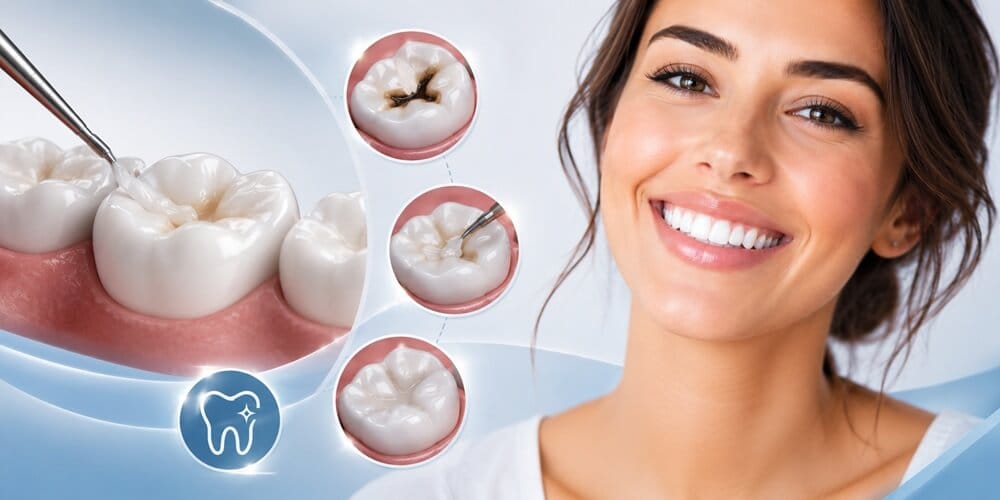
Composite Filling in Turkey is one of the most effective and minimally invasive dental treatments for restoring teeth affected by cavities, cracks, chips, or wear while preserving their natural appearance. Using advanced tooth-colored composite resin, dentists can rebuild damaged teeth with precision, creating restorations that blend seamlessly with the surrounding enamel.
Whether you need to repair a decayed tooth, replace an old metal filling, or improve minor cosmetic imperfections, composite fillings offer a durable, aesthetically pleasing, and cost-effective solution. At Zaren Clinic, every treatment is tailored to the patient’s unique dental anatomy, combining modern technology with expert care to restore both oral health and a confident smile in a single visit whenever possible.
Composite filling in Turkey refers to a tooth-colored restoration made with a composite material. Tooth-colored fillings have been increasingly demanded by patients and are processed using conservative procedures with minimal tooth preparation. Patient satisfaction is high, supported by studies showing that patients prefer tooth-colored restorations over amalgam restorations. Composite fillings, however, are more technique sensitive, have a shorter service life, and are more costly than amalgam fillings. Approved composite light cure tooth restoration materials have been used since the early 1970s, although the function of root canal filling is not included in the approval. Temporary composite materials for the cavity of irreversible pulpitis can be fouled by saliva leak before treatment; therefore, they should be replaced with their originals.
Dental caries is one of the most common diseases of mankind. Resin filling can be used for opening or dressing pulp of teeth with reversible pulpitis. Such dressing can be kept in the cavity for 1 month, and dressing in teeth with deciduous dentition may be retained for 3 months. Patients with very good oral hygiene and a low caries risk are suitable candidates for composites in anterior or posterior teeth. Uncomplicated crown fractures in a mature tooth can be treated using resin fillings, similar to dental trauma. Class V carious lesions, particularly in patients with high caries activity, can be filled with a resin-based material. However, patients who exhibit very high caries activity may not be suitable candidates for resin fillings positioned in the gingival area.
Composite dental filling Turkey consists of tooth-colored restorative materials employed tooth repair damaged or defective dentition. The primary component is a resin matrix, usually polymerized by a photoinitiating system. Reinforcing filler particles increase the fracture and wear resistance of the material, while enabling color-matching with natural teeth. Furthermore, the specific adhesion mechanism between the filling and dental tissues also enhances its overall properties. These restorative materials are often referred to as tooth-colored filling Turkey materials and white filling materials in standard dental terminology.
Historically, tooth-colored restorations have undergone significant developments. Although several commercial formulations have been available over the years, few acceptably meet the need for adequate durability under normal function. Yet many practitioners have remained committed to their use, aiming to fulfill progressively stricter standards of the art of dentistry. Today, restorations formed with these materials are widely used in minimally invasive, conservative dentistry and are often proposed in moderate caries activity-risk patients who exhibit adequate oral hygiene levels.
Tooth-colored restorations in anterior and posterior teeth have undergone remarkable development over the years, progressing from early materials and techniques to those in current use that conform to minimally invasive dentistry concepts. The introduction of dental composites and bonding systems marked the most important advance in dental material science in the past fifty years, making possible strong durable adhesive restorations made without tooth preparation extension. Today’s composite and adhesive systems have become recognized as superior within a broad range of clinical service conditions. The indications now established include restorations in tooth surfaces of high esthetic demands, restorations of small traumatic losses, fillings in non-cavitated or small-cavitated carious lesions of lower caries activity and/or risk, fillings in young teeth with extensive enamel lesions, and preparation of orthodontic teeth.
Performance tests for dental materials are conducted by a number of international and national organizations, including the American Dental Association, the American National Standards Institute, and the International Organization for Standardization; for tooth-colored restorative materials, a new standard for the long-term evaluation of posterior restoratives is now in place. Although clinically undetectable secondary caries are rare, a few earlier case studies have reported tooth loss or symptomatic pulps at ten years. Such results must be viewed with caution, as many of the factors affecting clinical outcome lay outside the materials themselves. Clinical use is also subject to regulatory supervision; the Food and Drug Administration advises that these materials be used within the indicated limits in the manufacturers’ labeling.
Patient selection is a critical determinant of treatment outcome, essentially guided by the indications for a composite filling. These indications are multifaceted and interrelated, encompassing the patient’s caries risk profile, the presence of acute dental injury, local esthetic demands, restoration of fractured lesions, and the presence of reversible pulpitis in primary teeth. Indications are best evaluated in the context of a decision tree model that considers tooth health along a continuum from health via reversible and irreversible pulpitis to associated apical lesions and tooth loss.
The concept of tooth decay is fundamental to pediatric and permanent dentistry alike, and thus the same considerations regarding the need for restorative treatment apply to both groups. At the management level, the rates and determinants of dental caries require careful consideration in choosing between resin, amalgam, or glass-ionomer fillings. The decision to restore a tooth affected by superficial carious lesions is influenced largely by parental perception of the need for restoration. However, tooth loss before the start of the permanent dentition is associated with a significant change in dental or social function, and a higher rate of caries and related problems. Evidence confirms that carious teeth that require restoration should be restored, for both deciduous and permanent teeth, and more specifically that resin fillings are a suitable treatment modality for primary teeth affected by caries.
Composite fillings in Turkey may be indicated for individuals in caries risk categories 1 or 2, patients with crown fractures or craze lines in the enamel that expose dentin, and the anterior teeth of patients aged 15 or younger who experience trauma. Composite fillings may also be considered when aesthetics demand at least partial filling of anterior teeth, restorative management of tooth fractures is required, or there is wide reversible pulpitis. Tooth decay is caused by the interaction of pathogenic bacteria from dental biofilm (plaque) and fermentable carbohydrates on dental hard tissues. Recognition is critical, as untreated enamel caries will deteriorate into dentin caries. A dental cavity is a pathological alteration of dental hard tissues that is treated by excavation of the soft tissue and restoration of the cavity with an appropriate material.
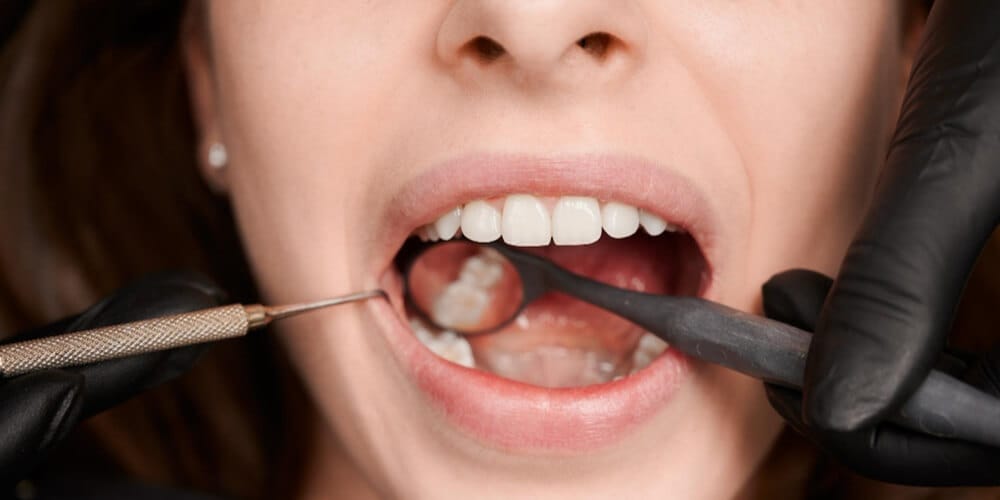
Diagnosis follows a systematic approach that includes an external examination of the face complemented by a visual-tactile examination. Radiographs are used to confirm suspected proximal caries and to detect irreversible pulpitis or periapical lesions. Vitality tests are required for symptomatic or previously treated teeth. The possibility of gap formation resulting from the carious process should be considered, as should the need for an interim restoration. A resin filling may be preferred in some situations over alternatives such as indirect restorations or extracts.
Assessment of the individual clinical situation determines whether a composite filling is required for one or several teeth or whether a different form of treatment is indicated. Diagnostic efforts are aimed at building an understanding of the entire tooth structure and the physical condition of the pulp. The diagnosis should first involve a visual-tactile examination of the teeth. Local explorer examination can help to detect softening of the surface. Signs that caries may be advancing toward the pulp include the presence of single or multiple teeth with a history of spontaneous pain, pain when lying down, and discoloration of the tooth.
Radiographs are examined for evidence of carious lesions and secondary caries, with attention to the area of the pulp chamber and the presence of surrounding bone. Teeth that are not sensitive to percussion, are not tender, and whose vitality can be confirmed are signs that the pulp is probably still healthy. The presence of a gap at the interface of a restoration and the tooth, discoloration of the tooth compared with neighbouring teeth, or a history of pain when lying down are possible indicators of pulpitis. In the absence of a good-enough margin in an existing restoration, an interim restoration of the cavity should be applied until a definitive restoration can be made. A resin filling is most appropriate for teeth with primary or secondary caries where the patient has a high esthetic demand, for teeth with caries that have resulted from trauma, or for the restoration of a fractured lesion when the fragment is not available. Composite resin fillings can also be indicated for a tooth with reversible decay in the area of the dentino-enamel junction.
A composite filling procedure for teeth is executed in a series of discrete steps. Initial assessment considers a range of factors that shape the overall treatment plan, which is then executed through operative steps.
Pre-procedure assessment and planning includes margin verification, occlusion check, shade selection, isolation feasibility, and signed consent. For the planned cavity preparation, dentine margins must be clear of caries, plaque, and tartar; occlusion must be stable and require no adjustment; application of rubber dam must be practical; and the patient must understand the procedure and its implications. The patient’s needs and wishes are crucial for optimal color-matching in the restorations. Shade selection should ideally be performed with the patient present, on a clean and dry tooth with normal moisture conditions. Tooth shade, position in dentition, and depth of the cavity are influential factors in matching a shade close to that of dentine, while translucency and enamel shade of the remaining incisors and canines must also be considered for the esthetic appearance of incisors. Discoloured teeth or teeth that require masking should preferably be restored in two shades. For sizeable or deep cavities, a compound composite filling should normally be placed, preferably with the dentine layer in a darker shade, closer to that of dentine.
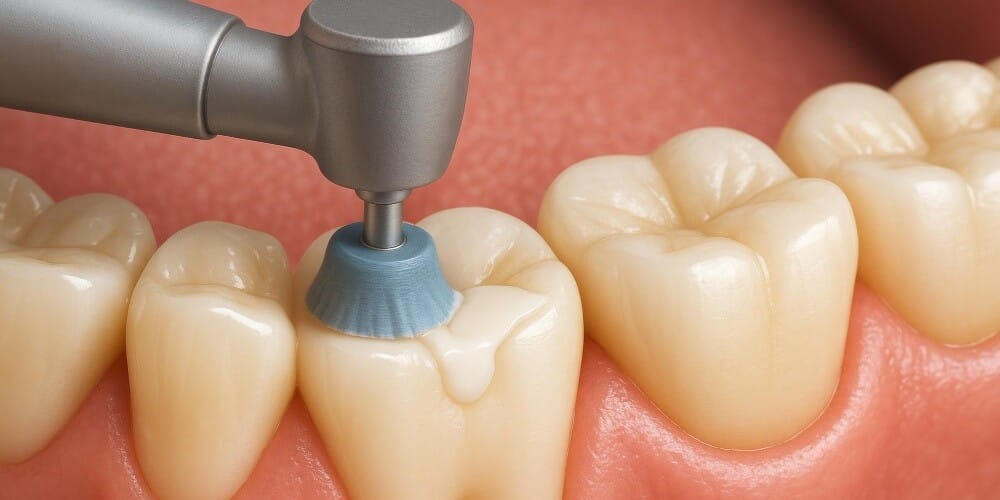
Operative steps generally unfold as follows. The cavity is prepared using the relevant technique, ensuring an even enamel margin all-round. Isolation is then achieved with a rubber dam to provide a moisture-free field. The cavity is etched, a bonding agent applied and then dried and rinsed according to the bonding agent’s manufacturer’s instructions. Composite resin is placed in increments not exceeding the specified depth. Each increment is cured separately, those placed at the periphery preferably in the same shade as the adjacent tooth structure. Shade matching is carried out after the restoration is built up. The restoration is then contoured to restore the original anatomy, before being finished and polished. Post-operative instructions advise that the bite be checked and any discrepancies rectified, the teeth brushed but not bled during the first 24 hours, large measures of food or soft drinks not taken during the first hour, and review arranged in six months, for increase of sensitivity during this period being unremarkable. The expected life of the restoration is given by the operator.
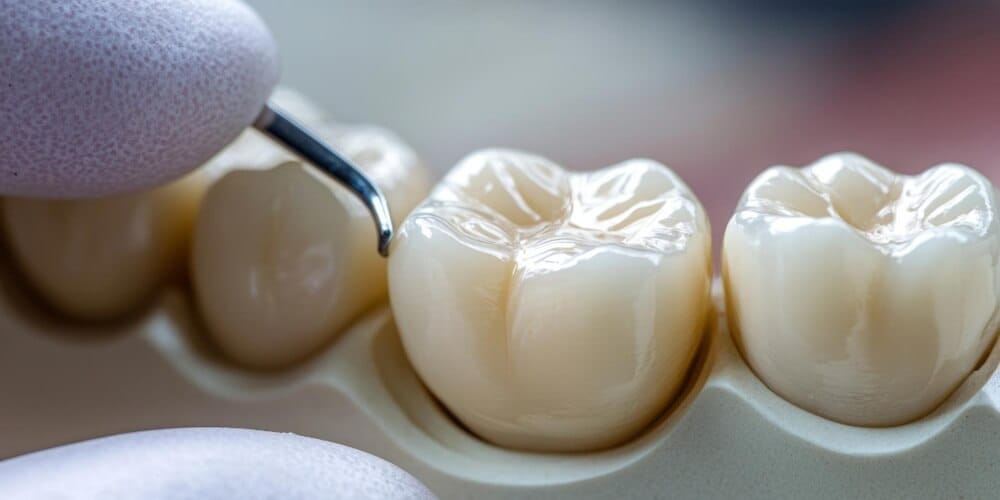
Composite fillings in Turkey are more accurately described as resin composite fillings; however, they comprise a composite with a resin matrix instead of a glass-polyomer or similar matrix. Using either enamel or dentin bonding agents, their strength comes from adhesion rather than macro-mechanical retention. Therefore, tooth-colored fillings in Turkey are a more descriptive term. While recent advances in the materials and techniques used for tooth-colored restorations have made them more usable than restorations of a generation ago, they should only be considered when one or all of the following factors are applicable to the clinical situation: preserving tooth structure is vital, a repair is required for a tooth on which much of the surface has been lost, and esthetic requirements demand an addition to a tooth colored or in an area of high visibility.
Visual-tactile examinations and bitewing radiographs usually enable the identification of a restoration indication. If either is absent, pulp vitality status must be ascertained. Based on clinical criteria, reversible decay should be the only reason for a resin filling in deciduous teeth. If temporary restorations are needed to allow caries detection, glass-ionomer cement is more advisable as a permanent filling material unless the area is in the smile zone, tooth-colored or under severe occlusal loading, and a tooth repair would be sensible.
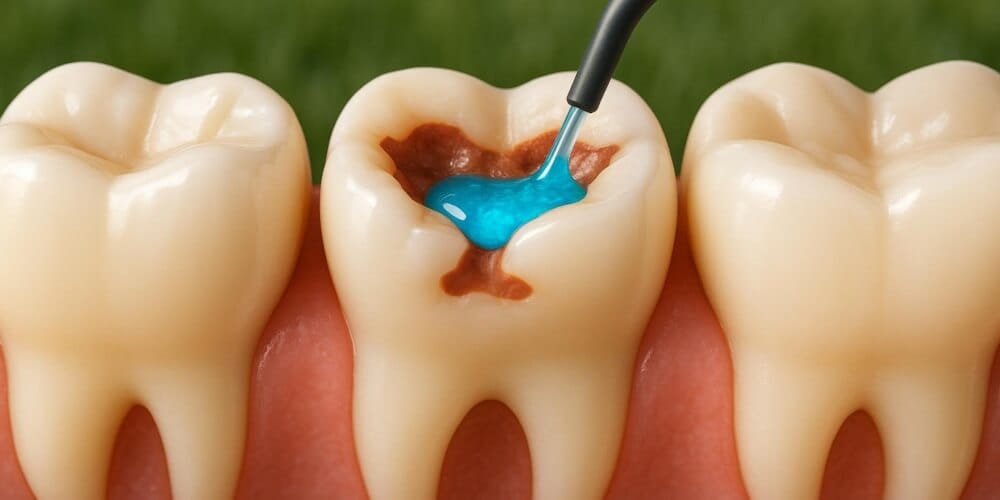
The operative steps for the placement of a composite filling are as follows:
Post-operative instructions are provided, along with a timeline for follow-up.
Once a composite restoration has been accomplished, it would be important to give instructions to the patient prior to their departure. The patient must be guided to take care of the new restoration in the same way they would take care of a natural tooth. Patients should be instructed to carefully check their biting and occlusion on the restoration. It is commonplace for fillings to feel slightly strange for a few days until the patient becomes accustomed to the restoration. However, if it is still bothering the patient after a short period of time, biting slightly on a piece of carbon paper can indicate where the bite is interfering, and returning to the dental surgery for a quick adjustment is a good idea. It is normal for composite restorations to be heat-sensitive for the first few days after placement, and chewing ice or drinking very hot or very cold drinks should be avoided during this time. However, if the tooth becomes sensitive to sweet foods or drinks or experiences prolonged sensitivity to hot or cold, the patient should return to the dental surgery. There is no need to avoid eating or drinking any type of food or drink after the composite is placed. However, if a new filling has just been placed during the first appointment of the day, it is usually advisable to avoid sticky foods like toffees for the first couple of hours to give the material a chance to set hard.
The restoration will continue to transform and develop for the first two to four weeks, undergoing rapid mineralization during this period, and so although food colours will be absorbed more readily for the first few days, this should settle down. After care is similar to that of natural teeth, although the patient should be aware that it is easier for bacteria to invade the tooth at the join between the restoration and the teeth. Daily brushing and flossing should keep this area clean, and regular dental visits will enable the dentist to check this area. If the margin of the restoration becomes visible and darkens, or if unexplained pain develops, the restoration should be checked. With proper care, composite restorations can be expected to last about six years.
Composite fillings, like other direct tooth-colored restorations, have some aesthetic advantages. They can be made according to the color, translucency, and sometimes the anatomical features of the natural tooth. Being matched according to the natural color of the tooth, they can provide an acceptable esthetic margin that is scarcely seen, especially in the anterior region. Such attention to detail has been validated by a study indicating high levels of patient satisfaction with regard to the aesthetic aspects of anterior resin-based composite restorations and natural teeth. Aesthetics should also include satisfactory shape and contour, as well as the absence of visible margins. These factors serve not only to satisfy the patient but also to provide a successful functional outcome. When esthetic requirements are high for anterior fillings, the procedure burden is generally increased by shade selection, several opaque layers, and/or the use of porcelain and dental composite Veeners.
With a less invasive tooth preparation than that required by other filling materials and especially by crowns, composite restorations better fit the principles of minimally invasive dentistry. The reduction of sound tooth structure helps to preserve the tooth’s vitality in teeth with reversible or initial pulpitis. It is also a preventive measure in high-risk individuals to avoid uncontrolled decay progression because it enables management of tooth decay as it appears rather than waiting for extensive carious lesions requiring a more aggressive approach. Comparison of radio-palpation sensitivity tests with untreated matched contralateral pairs, in patients with multiple bilateral posterior carious lesions, revealed that composite anterior fillings do not reduce the pulp sensitivity of treated teeth. When correctly placed and maintained, they provide functional outcomes comparable to those obtained with the other direct filling materials, with wear rates and fracture resistance in the 5–8 years range. Nevertheless, competitive long-term performance should rely on meticulous attention to detail during placement and finishing.
Composite fillings in Turkey are characterized by their aesthetic advantages and natural tooth color. Their translucency allows dark underlying structures to shine through, and special care can mask the layer of cement at the margin. Consequently, the restoration is not only invisible when viewed from the front but also superior in appearance and minimizes any optically unnatural appearance when viewed from the side. This point has been supported in 10 clinical investigations on tooth-colored vs. amalgam restorations of incisors and/or canines, where 90% of patients expressed a stronger preference for the more esthetic restorations. In 5 of these studies, the esthetic satisfaction of the operator received a similar rating. A majority of the surveyed dentists also considered composite fillings as more satisfactory than amalgam restorations in posts in premolars and inlays in molars.
In terms of clinical performance, several studies have now reported results as long as 12 or 13 years for anterior and posterior restorations placed according to the protocol. Judged on the basis of failure rates, these restorations have performed satisfactorily and been accepted as a proper option in the esthetic zone. However, questions of durability still need to be addressed and studied. These restorations, being based on a resin material, remain susceptible to a series of parameters that make them more prone to failure compared to resin-modified glass-ionomer materials and, especially, to dental amalgam.
Tooth-colored fillings require less remnant tooth structure than traditional amalgam fillings. Although remaining marginal enamel may seem extremely thin and fragile, caution during routine tooth brushing, eating, flossing, and teeth cleaning should be enough to preserve this remineralizing enamel. Composite fillings adapt well to cavity margins, even those that are not so well prepared, making it possible to preserve tooth structure and preventing unnecessary removal of tooth structure that is still healthy, provided that the remaining tooth structure is not at risk of future fracture.
Tooth-colored fillings fit into the growing philosophy of minimally invasive dentistry and respect the principle of biomimetic dentistry. Both philosophies aim to make the least invasive approach to preserve as much natural tooth structure as possible.
As restorations provide similar wear resistance to adjacent dentin, the load-bearing capacity of the remaining dentin and the ability to endure forces can be decisive for the type of material used. While glass ionomers are less durable than dental composites, recommendations suggest their application under non-inclusion and non-aesthetic conditions. These predictions seem reasonable when establishing anterior restorations of third molars or incisors subject to low functional load. Observing these guidelines, cleft patients, who often have dentin defects in the area of the incisors of the affected side, can undergo restorative treatments with glass ionomer cements as modified glass ionomer cements in the aesthetic area. Patients without a clearly defined color difference can have these restorations with a good functional prognosis. Composite resin materials have a longer clinical duration of use than glass ionomers; however, glass ionomers are indicated in patients with vast rehabilitation due to their cost and ease of handling.
The treatment for a persistent cavity that has not reached the pulp can be a restoration with a composite resin if all marginal conditions are visible, yet a very wide examination of the tooth should be performed to assess the need for a more extensive restoration. When subgingival conditions make it impossible to restore the cavity, a preventive treatment should be offered because these patients have greater defects of the vestibular dentin, more postoperative sensitivity, and require greater gingival care. The establishment of an interim filling is essential, as is internal control for each patient, especially those awaiting orthodontic treatment. A new restoration of secondary caries in the incision of the lower incisors may be maintained or replaced with a ceramic piece if an implant device is placed. Previous decays surrounding a filling can be restored with composite resin or glass-ionomer cement in the aesthetic region. In all checkups, attention should be paid to the pulp pulpitis, so that draining is diagnosed and treated.
Both clinical factors and costs of dental fillings may differ depending on the material employed. Turkey offers a variety of filling choices. Composite and glass ionomer fillings are typically more organisations-intensive and costly. The location of the clinic is also a determining factor. Private clinics, of course, are more costly. In general, private doctors charge more than government-run institutions; however, due to the ever-growing tourism business in Turkey, most consumers still prefer to use private practice. The facilities providing Temporary Stopping Filling come at a comparatively lesser price by employing Glass Ionomer cement, however, are never recommended for longer-term use since they fail to provide Esthetic Value and Wear-Resistance.
Despite its many benefits, Composite Restorations are yet to Challenge the Mundane Amalgam. The reasons for the reluctance of a large section of Dental Practitioners in utilizing them are due to the higher requirement of Skill, Time, and Money. And yet, in every country, patients are prepared to pay additional money for Composite Restoration, mainly due to the aesthetic advantage. Added to this is the recent interest in the Minimally Invasive Dental approach, where the preservation of a major part of Tooth Structure is given foremost importance. Whenever possible, it is advisable to make a Composite Restoration rather than a Silver Amalgam one. Composite Filling cost Turkey is comparatively lesser when associated with other Dental-Related visits.
Specific costs for a dental filling vary by region and location, including the type of health facility, the expertise of the clinician, the nature of the materials used, and the expected aftercare. Composite resin materials tend to be more expensive than traditional dental amalgam. Consequently, when treatment requires several restorations, the use of resin should be carefully considered. In Turkey, the average cost for a dental filling in a private clinic is $89, compared to about $50 in Sri Lanka, $140 in Thailand, and an estimated range of $250–350 in western countries. These price variations reflect a combination of factors, including greater availability, a more developed tourist sector, and a higher volume of patients seeking dental fillings in Turkey.
In absolute terms, resin filling in Turkey can be expensive compared with other materials used for dental cavity restoration. Public-sector, low-skill, and low-cost dental services operating in dental filling Turkey mainly place amalgam restorations due to their economic, practical, and biological characteristics. When performing restorations that require special colors of teeth, such as facials of anteriors or shading of anterior teeth, composite restorations are placed. The cost of composites is relatively higher, and insurance schemes cover it partially, but it has the advantage of an esthetic match.
Costs of resins for restorations mainly depend on the quality of the material used more than the procedure performed, and the trends for these materials are for a rather reduced cost per application. When taken together, when composites are placed in centers of excellence under certain conditions, the costs are similar to, or even lower than, those of amalgam restorations in the medium interval. However, it is worth noting that the advantage of minimal invasiveness when using composites can justify more than one trip to the dental office to finish the restoration and etch—bond—incremental placement—curing—layer matching—contouring—finishing of the filling even when it is accomplished by different operators.
Aftercare for Composite Restoration Following placement of a composite filling, maintaining proper oral hygiene should prevent any potential complications. Vigilant oral hygiene will help in the maintenance by brushing twice a day with fluoride toothpaste and daily interproximal cleaning with dental floss. Due to the greater susceptibility for drying out and staining during the maturation period of 48 hours, whitening toothpaste along with frequent contact with high concentrations of pigments coming from tea, coffee, red wine, or smoking should be avoided in the first 48 hours for the new restoration. The temporary sensitivity experienced through the restored tooth structure should also be conveyed to the patient as resolution takes two to three weeks, during which a tolerance to hot and cold food and drinks can usually be established. Recently placed restorations should also be spared from excessive pressure-producing strains, especially during the chewing of the diet in the first 24 hours in order to minimize such temporary postoperative sensitivity.
Marginal debonding of a composite filling is also a complication that is expected over time. To detect this condition, the filling should be examined for a small opening or a minor gap that appears at the edge of the filling at the restoration margin. In case of spotting that there is a small gap or suspected staining from food or drinks between the natural tooth-solid structure and the filling, it is best to visit the dentist immediately to get the concern examined. This will help to check if it only requires polishing or it has already entered the stage of microleakage, which if detected, requires immediate replacement of the filling to avoid any damage to the pulp. Other signs and symptoms of possible complication includes pain while chewing, which makes one suspect an inflammation of the tooth nerve or pulpitis. In such cases, it is best to contact the dentist without delay to prevent the decay from further spreading or worsening.
Routine care for a composite filling involves a carefully controlled oral hygiene routine similar to that of an indirect restoration such as a crown. Daily care includes brushing with a fluoride toothpaste or using a fluoride mouth rinse, mouthwashes containing chloride or chlorhexidine, and an annual visit to the dentist to remove accumulated stain and plaque. Use of fluoride toothpaste or rinsing with a fluoride solution enhances the surface of the composite filling. Staining or discoloration in a composite filling results from substances in the food or drinks consumed, from the mouth, or from unforgiving or excessive cigarette smoking. It can be removed by polishing with abrasive compound or paste.
Patients may experience heightened tooth sensitivity in the areas of recently placed resin fillings, especially in posterior teeth. Sensitivity is often transient but can last several weeks to months. Sensitivity is particularly noticed to temperature extremes, to sweet substances, and during chewing or biting. Cold, heat, sweets, and tactile acuity abate with time and healing of the pulp after placement of an indirect restoration or resin filling. Composite restoration must be done carefully, conserving sound dentin margins and pulp vitality. Foods that are either very hot or very cold should be avoided until the sensitivity resolves. In the first 24 hours after filling placement, it is wise to avoid extreme chewing forces or to put undue pressure on the tooth, and hard foods should be avoided.
Routine maintenance of a composite filling in Turkey requires regular oral hygiene practices, although some patients can experience sensitivity to hot and/or cold foods and drinks within this period for a variety of reasons. Patients are usually advised to avoid abrasive toothpaste, chemical bleaching, and extremely cold/hot beverages and food during the early maturation period of the material in order to ensure a successful result over time. Proper oral hygiene and regular dentist visits are important in order to prevent the formation of secondary caries in a restoration. It should also be kept in mind that the repeated consumption of food and drinks that can stain the restoration may lead to a colour change. Although polishing the restoration may limit towel stain accumulation, the use of leukoplakia, nitrochanter and/or other hydrated rinses, should also be taken into consideration in order to obtain a better colour management over time.
Like any other dental restoration, composite fillings can undergo complications. The most common of these is debonding at the restoration-tooth margin. This complication can be caused by several factors such as inadequate surface treatment, inappropriate filler properties, occlusal adjustment, poor adhesion of saliva-contaminated bonding surfaces, and poor oral hygiene. If the material is stained with food or drink over time, these stains can also accumulate underneath the filling, resulting in a dark colour at the margins. In addition, some patients may develop microleakage or secondary caries at the margins. Clinical symptoms of pulpitis, such as spontaneous pain, sensitivity to heat, pain to percussion, swelling, and/or the presence of a fistula in the periodontal region of the teeth with composite filling, are also indicators of the pulp health condition. If any of these symptoms are present, a visit to the dentist is strongly recommended.
Turkey’s healthcare infrastructure, including its dental sector and tourism industry, continue to flourish. Numerous private healthcare facilities operate, drawing patients from around the globe for treatments priced well below those of many Western countries yet equipped to the same high standards. Hospitals, clinics, and dental practices have received formal accreditations from established bodies, while infection-control measures, including sterilization of all tools and materials, seek to reduce the risk of cross-contamination. A diverse range of practitioners provides services to suit a variety of preferences and requirements. Cosmetic dentistry, including veneers and dental filling Turkey, is particularly popular with international patients.
Although composite fillings are rarely be the primary reason to travel to Turkey, lower costs and a shorter waiting time than in many parts of the Western world make it an attractive option, especially when combined with other dental work or a separate procedure such as tourism. Many private dental facilities have special arrangements with travel operators that organize packages inclusive of flights and accommodation.
Turkey has a well-established healthcare system, underpinned by multi-tiered services and an extensive teaching hospital network. Acute-phase care is available through a variety of public and private facilities, which differ in terms of service delivery and financing. It’s an evidence-based system, with a commitment to continuous quality improvement. The Turkish Ministry of Health functions as the steward, overseeing all aspects of the sector to ensure equitable health coverage for its people. It establishes the overall rules and regulations, as well as budget allocation and provider payment mechanisms, and directly manages providing services through a chain of public hospitals.
For all health services, providers integrate procedures to fulfill for clinical effectiveness (quality); standards are determined by regulation, codes of practice and clinical pathways. Service providers apply quality assurance procedures, ensure hospital environment safety (air, water and surfaces), monitor patient safety (administration of medication, transfusions, blood products), clean infectious and hazardous waste appropriately, manage hospitals’ infection prevention control programme, apply sterilising standard operating procedures for all sterilising facilities in hospitals and review data to reduce healthcare-associated infections. Patients undergoing high-risk interventions are assigned to fasting protocols approved by the Ministry of Health.
Turkey offers unparalleled ease of access to quality healthcare, including dental procedures like composite fillings. The country’s strategic geographic location enables visitors from Europe, Africa, Asia, and beyond to reach their destinations quickly and conveniently. Short wait times combined with affordable healthcare fueled by labor and cost of living differentials mean that seeking treatment in Turkey is an attractive proposition for many. The quality of healthcare standards governing most medical specialties and a highly developed tourist infrastructure providing hotel, food, transport, and leisure services complete the picture, allowing dental tours to be arranged with relative ease.
Healthcare services are provided by a wide spectrum of establishments, catering to different demographic groups, kinds of care, and depths of complexity. These range from small, government-subsided polyclinics offering basic maintenance care to highly specialized surgical centers with Intensive Care Units. Patients requiring more complex interventions have access to private hospitals equipped with all the necessary accreditation and facilities. All medical services are subject to stringent quality and safety regulations, encompassing sterilization techniques and the use of single-use materials for all invasive procedures.
Evidence presents variable ranges depending on service conditions; durability factors include stress types, tooth position and use, and oral hygiene. Adequate maintenance, with regular professional checks, enhances restoration longevity.
Determining composite filling life expectancy is crucial given the potential need for replacement; such restoration updates typically entail a fee similar to the original placement. Ranges observed in studies consistently indicate that an initial adaptation phase is followed by limited restoration life, with the use of resin in posterior teeth reportedly conferring a lifespan of 4–5 years. Factors influencing overall lifespan include the nature (compressive or tensile) and magnitude of masticatory loading, residual transverse dentinal tubule density—position in molar or premolar area—and oral hygiene standard; the associated load fatigue of these restorations is reduced, but not eliminated. Combined static and cyclic loading conditions increase the possibility of failure over that expected under cyclic fatigue alone.
Durability assessments of anterior fillings highlight their sensitivity to functional use, especially differentiating between aesthetic and functional need, yet concealment of a dull area posterior to the extra-oral keratinized band is typically not even on speech identification. When such functionality is important, use of a durable rather than resin-based restoration is recommended. However, if proper oral hygiene is performed, normal consumption is followed, and a discolored aspect is intolerable, conservative plastic restoration is possible.
The placement of a composite filling on a tooth may entail some discomfort, but it is completely painless. Typically, prior to commencing the actual dental filling Turkey procedure, the target site will be numbed with the help of an anesthetic. There may be a slight prick for the injection, but once the anesthetic has taken effect, the procedure can commence and the patient will not feel any pain. After the filling procedure, patients may experience mild soreness as the anesthesia is still wearing off. Mild sensitivity might also be felt while the teeth are adjusting to the filling; however, the pain is often very minimal and can be managed with over-the-counter painkillers if necessary.
Composite fillings can be placed with only localized numbing and are considered one of the simplest dental procedures available. Patients typically find the procedure no worse than that of a dental cleaning.
Yes, composite restorations can be placed on anterior teeth. Esthetic and translucency requirements impose more demanding expectations on materials employed in these restorations due to their visibility when smiling. Therefore, layered techniques help to provide the best possible result by recreating the different layers of a natural tooth. Thin enamel and dentin of the frontal teeth make shade selection particularly challenging. The delicate preparation of these teeth seems to be beneficial, as dentin is usually at a minimum on the facial and lingual surfaces. Polyvinylsiloxane in the form of a putty index could be used as a layer-thickness guide for an anterior central composite restoration. In a group of anterior teeth with restorations of two or more surfaces, marked marginal deterioration and loss were observed. Risk factors were heavy parafunction, high number of surfaces restored, and faulty contour.
In dental practice, aesthetic improvement of a tooth is an important reason for cavity filling Turkey. Any filling materials should satisfy the patient in terms of colour and appearance because patient satisfaction has begun to take precedence over the dentist’s needs. However, it is a challenge to maintain this satisfaction after a long time period due to the occurrence of staining of the restoration surface and margins. Staining of the surface is pure appearance, but staining of the margins can also affect the longevity of the restoration. Therefore, staining can be divided into two categories: one is related to saliva and bacteria that create biofilm on the surface of the restoration, and the other is deposition at the interface between the restoration and tooth structure. Internal discoloration was observed in the restorations with orthodontic treatment applied fluoride dentifrice and also in the radioactive ionomers when exposed to fluoride dentifrice, root caries solution and chlorhexidine digluconate mouthwash, which are related to compounds introduced from the oral cavity.
It should be noted that various factors can influence the staining of resin composites. When the stains are intrinsic, proper maintenance is of prime importance: brushing with fluoride dentifrice and polishing with nonabrasive agents may eliminate surface stains and preserve the colour matching and transparency of the restorations. When the stains are created at the restoration/tooth structure interface, prevention is difficult, and the patient should be aware that such discoloration is either very difficult or impossible to correct.
Composite restorations in dentistry aim to restore aesthetics, function, and integrity of teeth with tooth-colored filling Turkey materials. Composite fillings are composed of a resin matrix containing ceramic filler particles, having an adhesive mechanism that bonds the filling material to the dental tissue, and the ability to blend with the natural color of teeth. Historically, composite fillings have been called white filling or tooth-colored filling. Today, because of the increasing demand for minimal-preparation techniques, resin filling materials are used all the more in a variety of clinical conditions.
Esthetic demands and the desire for conservative and minimally invasive preparations render composite restorations increasingly popular; yet, these restorations are not universal remedies. Widespread use of composites requires an understanding of materials, and the constraints of indications and proper techniques. An evidence-based approach—informed by knowledge, technical skill, and component facility—encompasses the material properties of cast gold and ceramic, and of the adhesives that ensure the bond between the filling and the tooth. Effectiveness is reflected not only in clinical performance but also in the rate of replacement over a restoration’s lifetime. Such data influence clinicians in choosing the optimum material, and in public policy governing the manufacture and use of composites.